


From the Chief Editor
The beginning of 2026 marks a new phase for Vedic wellness.
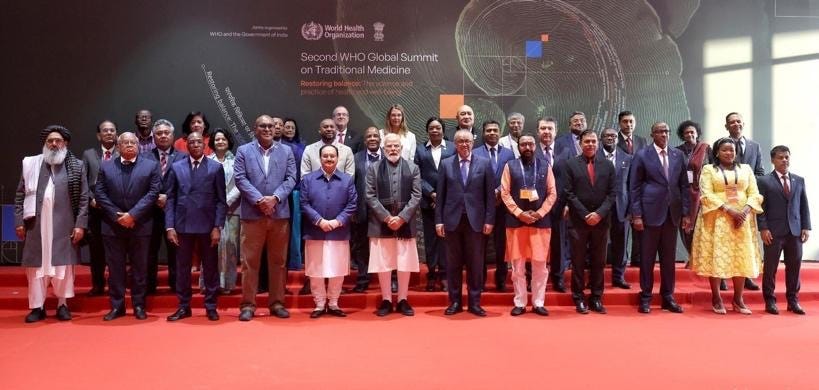
For years, traditional knowledge was often discussed either as heritage to be preserved or as philosophy to be admired. Today, the conversation is changing. Global institutions are now asking more practical questions: how can ancient systems contribute to prevention, resilience, public health, chronic disease care, and person-centred wellness? How do we build stronger evidence, better standards, safer regulation, and meaningful integration without diluting the depth of traditional knowledge? That shift is now visible at the highest levels of global health policy. The WHO’s Second Global Summit on Traditional Medicine in December 2025 brought together delegates from more than 100 countries, emphasized stronger evidence, regulation, innovation, and health-system integration, and linked traditional medicine directly to the Global Traditional Medicine Strategy 2025-2034. (World Health Organization)
This is why the present moment matters.
Vedic wellness is no longer being viewed only through the lens of antiquity. It is increasingly being approached as a living framework for whole-person health, one that connects body, mind, behavior, rhythm, environment, purpose, and consciousness. The world is not asking Vedic knowledge to become modern by abandoning itself. It is asking how such knowledge can be studied, translated, and applied with rigor and relevance. WHO’s February 2026 designation of the Charité Competence Center in Berlin as a Collaborating Centre for Traditional, Integrative, and Preventive Medicine is one recent sign that this infrastructure for evidence and integration is actively being built. (World Health Organization)
This issue explores that transition through a Vedic lens, with special focus on the Atharvaveda, the healing and protection dimension of Vedic thought, while also bringing readers the newest signals from research on yoga, pranayama, mantra, autonomic regulation, and Ayurveda’s growing conversation with microbiome and precision-health science. (PMC)
Prof Abhimanyu Kumar MSc, MD, PhD
Chief Editor


Atharvaveda: The Veda of Healing, Protection, and Everyday Well-Being
If the Rigveda gives us sacred insight, the Yajurveda gives us disciplined action, and the Samaveda gives us melodic elevation, the Atharvaveda brings Vedic wisdom closest to the practical realities of embodied life. It speaks in the language of healing, protection, herbs, vitality, domestic harmony, mental steadiness, and the relationship between human life and the wider forces of nature.
That is precisely why it feels so relevant in 2026.
Modern health systems are increasingly recognizing that health is not merely the treatment of disease. It is a systems phenomenon shaped by stress physiology, immunity, sleep, environment, behavior, social connection, food, and meaning. WHO’s current traditional medicine agenda mirrors this broader view through its emphasis on prevention, evidence, integration, innovation, and person-centred care. (World Health Organization)
The Atharvavedic worldview does not isolate healing into a single pill, symptom, or episode. It sees health as harmony, maintained through right relationship with body, mind, herbs, sound, environment, and sacred order. In modern scientific language, one might call this a systems approach to wellness.
Vedic Reflection
‘May the herbs be auspicious to us.’
This Atharvavedic healing orientation is strikingly aligned with today’s renewed interest in plant-based therapeutics, ecological health, microbiome-linked nutrition, and preventive care. WHO’s traditional medicine strategy explicitly emphasizes evidence generation, regulation, knowledge systems, and cross-sector collaboration, while its 2025 events around AI in traditional medicine signal a growing effort to connect ancient knowledge with modern analytical tools. (WHO Apps)
What this means for readers
Vedic healing is not only about remedies. It is about restoring alignment between the individual and the conditions that support life.
Global Pulse
Why the world is paying closer attention to traditional medicine
The most important global development shaping this issue is the accelerating institutional recognition of traditional medicine.
WHO’s Second Global Summit on Traditional Medicine, held in New Delhi from 17 to 19 December 2025, opened with a clear agenda: stronger evidence, better regulation, deeper integration into health systems, collaboration, and community engagement. WHO reported that nearly 90 percent of Member States, 170 out of 194, say that 40 percent to 90 percent of their populations use traditional medicine. That level of global use changes the conversation from cultural interest to public-health relevance. (World Health Organization)
When the Summit concluded on 22 December 2025, WHO described it as a major milestone, noting more than 16,000 online registrations, 800 delegates from over 100 countries, ministers from more than 20 nations, and 160 speakers. It also announced a new 19-member Strategic and Technical Advisory Group to help guide evidence, innovation, and implementation in traditional medicine. (World Health Organization)
The momentum continued on 26 February 2026, when WHO designated the Charité Competence Center for Traditional and Integrative Medicine in Berlin as a Collaborating Centre for Traditional, Integrative, and Preventive Medicine for four years. WHO said the centre’s work will include reviewing existing research, pilot clinical studies, real-world evidence generation, utilization analysis, implementation frameworks, policy dialogue, and knowledge dissemination. (World Health Organization)
Why this matters for Vedic wellness
This means the future of traditional systems will increasingly be shaped not just by reverence, but by research design, quality standards, public-health relevance, and credible translation into modern care settings. That is an opportunity, not a threat.
Research Radar
Fresh science, timeless wisdom
1. Breath That Rebalances
Recent research on slow pranayama suggests that controlled breathing may reduce anxiety and improve autonomic regulation through effects on sympathovagal balance and heart rate variability. A 2025 systematic review on pranayama for mental disorders also points to growing therapeutic potential in this area. (PMC)
Reader takeaway: A few minutes of conscious breathing may help regulate the body’s stress response, not just calm the mind.
2. Yoga as Whole-System Practice
Recent yoga research has moved beyond flexibility and posture. A 2025 systematic review and meta-analysis found a positive impact of yoga-based interventions on anxiety and heart-rate-variability measures among students, suggesting benefits for both subjective distress and physiological regulation. (PMC)
Reader takeaway: Yoga is increasingly being studied as a whole-system intervention linking body, breath, and nervous-system balance.
3. When Sound Becomes Physiology
A 2025 study on mantra recitation found measurable autonomic and respiratory modulation during different forms of mantra practice. Another 2025 study reported that one month of listening to 528 Hz OM chanting reduced pulse and systolic blood pressure, increased parasympathetic dominance on HRV analysis, and improved stress, sleep quality, and psychological well-being in people with hypertension. (PMC)
Reader takeaway: Sound may be one of the most subtle but measurable pathways through which Vedic practice influences internal calm.
4. Your Body Has a Rhythm
Ayurveda’s emphasis on Dinacharya and Ritucharya finds a compelling parallel in chronobiology, the modern science of biological timing. WHO’s traditional medicine strategy also highlights prevention and health promotion, which aligns with time-structured, lifestyle-based approaches to well-being. (IRIS)
Reader takeaway: Health is shaped not only by what we do, but by when and how regularly we do it.
5. The Microbiome Meets Prakriti
A 2025 scoping review examined scholarly work on the association between Prakriti and the gut microbiome, highlighting growing interest in Ayurveda’s constitutional logic as a possible framework for personalized health research. A January 2026 review also explored Ayurveda, microbiome, and childhood immunity, linking Ayurvedic ideas of bala (strength), daily routine, diet, breastfeeding, and herbs like Guduchi, Amalaki, and Triphala with microbiome-informed thinking. (Lippincott Journals)
Reader takeaway: Ayurveda’s long-standing emphasis on constitution, digestion, and adaptation may become increasingly relevant in the age of personalized and microbiome-aware medicine.
6. Resilience for the Young Mind
Recent research and commentary continue to position yoga as a scalable, culturally resonant support for adolescent well-being, emotion regulation, and resilience in educational contexts. (PMC)
Reader takeaway: Vedic wellness is not only about healing illness. It may also help build psychological strength early in life.

Practical ways to apply this month’s theme
Live by rhythm, not randomness: The classical emphasis on routine is gaining renewed relevance in a world marked by sleep disruption, irregular meals, and digital overstimulation. Biological timing matters.
Use breath as a daily regulator: Pranayama is one of the simplest and most accessible Vedic tools. It requires no equipment, very little space, and can be integrated into almost any lifestyle.
Revalue sound: Mantra, chanting, or even mindful vocal resonance may help bring breath, attention, and physiological calm into alignment.
Think of digestion as an ecosystem: Modern microbiome science and Ayurvedic thinking converge on a simple insight: digestion is not only about food quantity, but about timing, quality, compatibility, and the body’s ability to transform.
Build wellness before disease appears: One of the strongest shared themes between Vedic thinking and contemporary preventive health is that health should be cultivated, not merely repaired.
These applications are consistent with the preventive and person-centred direction emphasized in the WHO Global Traditional Medicine Strategy 2025-2034. (IRIS)
Innovation Watch
AI, evidence, and the next chapter of traditional medicine
A major development in 2025 was WHO’s increasing attention to artificial intelligence in traditional medicine. WHO, ITU, and WIPO launched a technical brief at the AI for Good Global Summit 2025 focused on mapping applications of artificial intelligence in traditional medicine and identifying best practices. WHO described the brief as a way to document global examples, highlight effective approaches, and draw lessons from different regions and contexts. (World Health Organization)
WHO’s traditional medicine questions-and-answers page also explicitly describes AI as a game-changer, especially for analysing large and complex bodies of knowledge. (World Health Organization)
Feature Insight
From ‘alternative’ to ‘integrative and evidence-aware’
One of the biggest changes underway is conceptual. Traditional medicine is increasingly being discussed not as an outsider to health systems, but as a component of a broader integrative model that must still meet expectations around safety, quality, evidence, and responsible use. WHO’s 2025-2034 strategy is built around four main objectives: establishing the evidence base, supporting safe and effective provision through regulation, integrating safe and effective TCIM into health systems, and optimizing cross-sector collaboration. (WHO Apps)
For Vedic wellness, that is an invitation to lead with both depth and discipline.
Its strength lies in its capacity to think in relationships: between food and digestion, breath and mind, rhythm and metabolism, ethics and inner state, environment and well-being. Modern systems science is increasingly recognizing those same kinds of interdependence.

Study Vedic wellness with depth and practice
At the International University of Vedic Wellness, learning is designed not only to inform, but to transform. Our programs aim to connect classical Vedic insight with modern understanding in ways that are practical, thoughtful, and relevant to contemporary life.
Explore courses in Ayurveda, Yoga, Vedic sciences, and integrative wellness designed for seekers, learners, and professionals.
Closing Reflection
At its deepest level, Vedic wellness teaches that health is not an isolated medical event. It is a pattern of right relationship, with food, breath, sleep, conduct, sound, season, awareness, and the larger intelligence of life.
That insight is no longer confined to the past. In 2026, the world is building new frameworks to study it, evaluate it, and apply it with greater seriousness. The task before us is not to choose between tradition and science. It is to allow each to sharpen the other.
That is where the future of Vedic wellness truly begins.
International University of Vedic Wellness
1 E, Bode Rd., Streamwood, IL, USA
Website: iuvw.org
Email: contact@iuvw.org